

Classic Jaguar XJS Coupe Detailing
It's a beautifully preserved 50 year old Jaguar XJS, finished in a soft ivory over deep red leather, sitting on its original alloy wheels. Cars like this aren't just vehicles. They're rolling pieces of design history, and looking after one properly requires a completely different mindset from caring for a modern SUV or saloon.
Model Variant | XJS |
Primary Colour | White |
Fuel Type | PETROL |
Transmission | Auto 3 Gears |
Wheel Plan | 2 Axle Rigid Body |
Engine | 5340 cc |
Body Style | Coupe |
Year Manufacture | 1977 |
E-Type Launched in 1975
The car pictured is a Jaguar XJS, the long-running grand tourer. The registration plate on this particular example carries an "S" suffix, which under the UK's old suffix registration system places its first registration between August 1977 and July 1978. That makes this XJS somewhere in the region of 47 to 48 years old, an early Series 1 example from the very first few years of production.
This was a car built in the shadow of the E-Type, and it shows. Jaguar's design team, working from Malcolm Sayer's aerodynamic principles, gave the XJS a shape that was radical for its era: a long bonnet, a low, sweeping roofline and, most distinctively, the "flying buttress" rear pillars that flow from the roof down to the rear wings, flanking a compact rear window rather than wrapping around it.

It's a feature you can see clearly in the images, the C-pillar sweeping down in a bold, sculptural line rather than the flatter glasshouse most modern coupes use. On a contemporary SUV or saloon, aerodynamics and pedestrian safety regulations dictate almost every exterior line. On a car like this, the designer's eye came first, and the result is a silhouette that no modern regulation-bound vehicle could replicate today.
Underneath that bonnet, most XJS models of this era housed Jaguar's smooth 5.3-litre V12, one of the great engines of the period, prized for its refinement rather than outright aggression. It's a car that was built to cover continents at a relaxed, effortless pace, and everything about its detailing, from the quarter-light windows to the chrome-ringed headlamps, reflects that grand touring purpose.
Why Classic Cars Age Differently to Modern Vehicles
Modern luxury vehicles are built with multi-stage clear coats, factory-applied corrosion protection, and UV-stabilised plastics designed to survive a decade of daily use with minimal intervention. A car like this XJS predates almost all of that technology. Its paint is a single-stage or early two-stage system without the same UV resistance, its brightwork is genuine chromed steel and brass rather than plastic-backed trim, and its rubber seals and interior materials were never engineered with 50 years of ageing in mind.
That means a classic like this doesn't just need cleaning. It needs active conservation. Left unchecked, single-stage paint oxidises and loses its depth of colour, chrome trim pits and corrodes from the edges inward, and leather dries out and cracks in a way that modern synthetic-blend interiors simply don't. Every part of a proper classic car maintenance routine exists to slow down processes that, on a car this age, are already decades further along than on anything built in the last ten years.
Detailing As Vehicle Age Prevention
For a car like this, detailing isn't really about making it look good for a weekend show. It's about arresting decay before it becomes structural. A single-stage paint finish, once properly corrected and sealed, forms a barrier against UV oxidation and moisture ingress that dramatically slows further ageing. Left unpolished and unprotected, that same paint will continue to fade, chalk and thin with every passing year, until there's eventually not enough clear material left to correct at all.

The process typically involves a gentle, multi-stage machine polish using finishing pads and light-cut compounds, since older single-stage paint has far less thickness to work with than a modern clear coat and can burn through quickly in inexperienced hands. Once corrected, a durable wax or a classic-car-safe sealant is applied rather than an aggressive modern ceramic coating, since some older paint systems don't bond in the same way with newer coating chemistries. Every stage has to be judged by eye and by feel, which is exactly why classic detailing is considered a specialist skill rather than a routine service.
Storage: The Single Biggest Factor in a Classic's Survival
More classic cars are ruined by poor storage than by poor driving. A vehicle like this XJS should never sit outdoors or in a damp, unventilated garage, since fluctuating humidity is one of the fastest routes to corrosion on old steel panels, sills and floor pans. Ideally, a car of this age is kept in a dry, climate-stable space with good airflow, raised slightly off the ground on axle stands if it's going to sit for extended periods, and covered with a breathable, soft-lined car cover rather than plastic sheeting that traps moisture against the paint. See our information on Car Storage.
A trickle charger on the battery prevents the deep discharge cycles that shorten a classic battery's life, and the tyres should be checked and rotated periodically to avoid flat-spotting from sitting in one position for months at a time. For owners who do drive their classic occasionally, an even bigger risk is short, infrequent journeys that never fully warm the engine or evaporate condensation from the exhaust system, so a longer run every few weeks does more good than several short ones.
The Cleaning Chemicals Used and the Ones to Avoid
This is where classic car care diverges most sharply from modern detailing. Many of the harsher, faster-acting chemicals used confidently on a new SUV or saloon are simply too aggressive for a car this age.
Paintwork: pH-neutral shampoos only, applied with the two-bucket method, avoiding any acidic wheel or tar removers that could strip thin, original paint
Chrome trim: a dedicated chrome polish and protectant, rather than an all-purpose metal polish, to avoid scratching the soft original plating
Leather: a pH-balanced leather cleaner followed by a proper leather conditioner formulated for older, more porous hides, never a silicone-heavy "quick shine" dressing that can leave a sticky film and accelerate cracking over time
Rubber seals and trim: glycerine or water-based rubber conditioners rather than petroleum-based dressings, which can dry out and perish original rubber compounds faster than they protect them
Interior plastics and dashboard: gentle, UV-protective dressings applied sparingly, since older dash plastics are far more prone to permanent discolouration than modern equivalents
Caring for the Jaguar XJS Red Leather Interior
The deep red leather seen throughout this XJS's cabin is one of its defining features, and it needs a routine that's markedly gentler than what you'd use on a modern car's leather. Original hides from this era are thinner and more porous than today's coated, pigmented leathers, which means they absorb both dirt and cleaning product more readily.
A proper routine starts with a soft brush or microfibre to lift loose dust from the grain and stitching before any liquid touches the surface. A pH-neutral leather cleaner is then worked in gently, avoiding oversaturation, followed by a conditioner rich in natural oils to replace moisture lost to decades of UV exposure through the glass. Done every few months, this keeps the leather supple and prevents the fine cracking that's almost impossible to reverse once it sets in. It's a slow, patient process, closer to conserving an antique than washing a car, and it's one of the most rewarding parts of caring for a vehicle like this.
The Dashboard, Chrome and Alloys
The dashboard on a car of this vintage is typically a mix of painted metal, wood veneer or early plastics, all of which react badly to harsh solvents and direct sunlight. Regular, gentle dusting and an occasional application of a UV-protective, non-greasy dressing keeps it from fading or warping without leaving the slick, artificial shine that so many modern interior sprays produce.
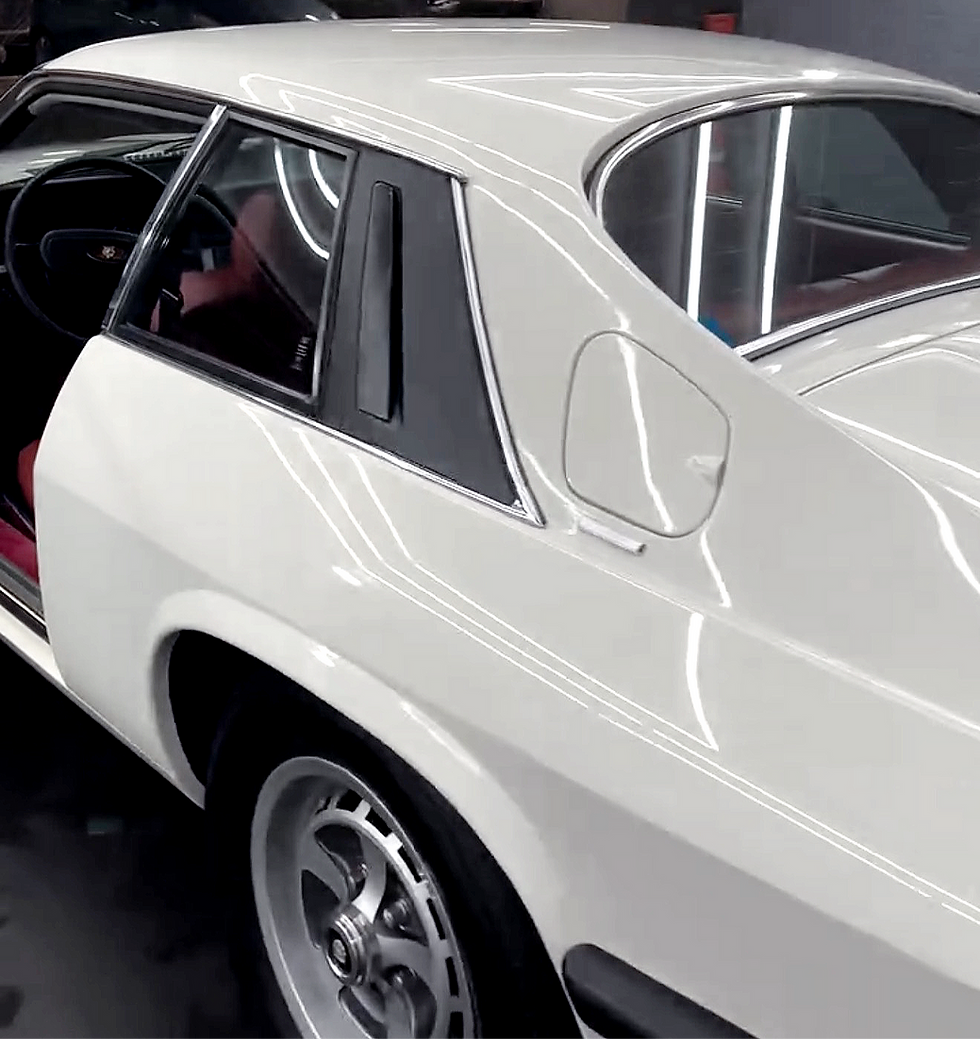
The exterior chrome, from the headlamp surrounds to the elegant, slender wing mirrors mounted out on their own stalks, is genuine plated brightwork rather than the plastic-chromed trim found on most cars today. It rewards regular attention with a dedicated chrome polish, buffed by hand, which prevents the fine surface pitting that eventually breaks through to bare metal beneath. Those wing mirrors in particular are a lovely example of period design, mounted independently on slim chrome stalks rather than integrated into the door panel, giving the whole front three-quarter view a delicate, uncluttered elegance that no modern mirror housing, shaped by pedestrian-impact regulations, could ever match.
The factory alloy wheels deserve the same careful approach as the paintwork: a dedicated, non-acidic wheel cleaner, soft brushes to avoid marking the finish, and a protective sealant to guard against brake dust building up on an original finish that can't simply be resprayed without affecting the car's authenticity and value.
XJS Ownership
What makes a car like this XJS so special isn't just its rarity or its styling, though the flying buttress roofline and those elegant, stalk-mounted mirrors alone set it apart from almost anything built since. It's the fact that keeping it pristine is an ongoing act of craftsmanship rather than routine maintenance. Every wash, every polish and every leather treatment is a small act of preservation, carried out with an understanding of exactly what the car is made from and how those original materials behave differently to anything manufactured today.
At AP Car Spa, we treat classics like this XJS with that same philosophy. Our approach to vintage and classic vehicle detailing combines the technical skill of modern paint correction with the patience and material knowledge that older cars genuinely demand, so that pieces of automotive history like this one can keep being driven, admired and enjoyed for decades still to come.


Comments