

How to Maintain a Luxury Car Finish in London
The Complete Guide from AP Car Spa
London is one of the greatest cities in the world. It is also one of the harshest environments you will ever ask a prestige vehicle to live in. The combination of stop-start traffic, polluted urban air, narrow roads, tight parking, road salt in winter, and the relentless cycle of rain and sun creates a sustained assault on paintwork, alloys, chrome, and trim that most car owners simply do not consider until the damage is already visible.
At AP Car Spa we see the effects of London city life on prestige vehicles every single day. Ferraris arriving with iron fallout embedded so deeply in the lacquer that it has started to oxidise. Range Rovers with alloys corroded from months of exposure to road salt and acid-based wheel cleaners. Bentleys whose chrome trim has developed the early signs of pitting from pollution and standing moisture.
This guide is our comprehensive answer to a question we are asked constantly. How do you actually maintain a luxury car finish in London? We cover every element of the vehicle, the specific threats the city poses, and the practical steps that make the difference between a car that looks immaculate after five years and one that looks tired after two.

The Reality of London City Life for Prestige Vehicles
Why London Is Particularly Demanding
Most prestige cars spend the majority of their lives in cities. London is home to one of the highest concentrations of high-value vehicles in Europe, and the city creates a unique set of conditions that accelerate deterioration in ways that rural or motorway driving simply do not.
Traffic Density and Brake Dust
London traffic means constant braking. Every time a vehicle brakes, the friction between brake pads and discs generates fine metallic particles that become airborne and settle on every surface of the car, but most heavily on the wheels and lower bodywork. These iron particles are not just a surface contaminant.
They embed into lacquer, paint, and alloy surfaces and begin to oxidise. Left untreated, this iron fallout creates the rust-coloured spotting you see on neglected wheels and lower panels. On a prestige vehicle, this process is accelerated by the high-performance braking systems that generate more heat and therefore more fallout.
Air Pollution and Industrial Fallout
London's air quality, while improving, remains a significant source of contamination for vehicle paintwork. Industrial and traffic-related pollutants settle on horizontal surfaces continuously.
Roof panels, bonnets, and boot lids accumulate a thin layer of contamination that cannot be removed with a standard wash. Over time, these pollutants acidify in moisture and begin to etch into the clear coat. On a vehicle parked on a Chelsea or Mayfair street overnight, this process repeats every single day.
Road Salt in Autumn and Winter
The Transport for London network applies significant quantities of road salt to London's streets between October and March. Salt is highly corrosive. It attacks alloy wheels, wheel arch liners, brake components, and the lower sections of bodywork with sustained chemical aggression.
A vehicle driven on salted roads and then left unwashed for a week has been sitting in a corrosive environment for that entire period. For prestige vehicles with polished alloys, diamond-cut wheels, and exposed chrome, the damage from seasonal salt exposure is one of the most common and preventable causes of deterioration we see.
Tree Sap, Bird Droppings, and Urban Contamination
London's tree-lined streets in Chelsea, Kensington, and Fulham are beautiful. They are also a significant hazard for parked vehicles. Tree sap and bird droppings are both acidic and, when left on paintwork in warm weather, can etch through clear coat within hours. Bird dropping acid attacks are among the most common causes of permanent paint damage we encounter, and they are almost entirely preventable with the right protection and prompt response.
Tight Roads, Parking, and Physical Damage
London's roads were not designed for the width of a modern Bentley Bentayga or Range Rover Sport. Tight parking bays, bollards, raised kerb stones, and narrow mews streets are a daily hazard. Kerb damage to alloys, minor scuffs from parking, and door dings are realities for any vehicle used regularly in the city. The goal is not to pretend these will never happen, but to address them promptly and professionally before minor damage becomes major deterioration.
We estimate that a prestige vehicle used daily in London is exposed to more paint-damaging contamination in a single week than the same vehicle would encounter in a month of rural or motorway use. City driving is simply harder on a car.

The Pros and Cons of London City Life for a Prestige Vehicle
The Advantages
In the interest of balance, London living does offer some genuine advantages for luxury vehicle maintenance. The concentration of specialist detailers, prestige garages, and premium service providers in Chelsea, Kensington, and Mayfair means that access to genuine expert care is excellent. Most journeys are shorter and at lower speeds, reducing mechanical wear. And the proximity of secure underground car parks and professional storage facilities means that owners who choose to use them can protect their vehicles from the worst of the environmental exposure entirely.
The Disadvantages
The disadvantages, however, are substantial and consistent. Stop-start traffic is harder on brake systems and generates more fallout. Urban pollution accumulates daily. Road salt, tree canopy, and the sheer density of other vehicles and infrastructure make minor damage statistically more likely.
And perhaps most significantly, many London-based prestige vehicle owners do not wash their cars frequently enough, because they do not visually see the contamination that is accumulating and causing damage at a microscopic level.
The invisible damage is often the most significant. A car can look clean and still have a layer of bonded iron fallout, airborne pollutants, and salt residue that is actively degrading the lacquer beneath the surface.
Maintaining the Paintwork and Clear Coat
The Foundation of a Perfect Finish Is Protection
The single most effective thing you can do for a prestige vehicle's paintwork in London is to have professional-grade protection applied before the contamination cycle begins. Reactive maintenance is always more expensive and more involved than preventative care. A ceramic coating or Paint Protection Film applied to well-corrected paintwork is the equivalent of a sealed, hydrophobic barrier between the lacquer and everything the city throws at it.
Ceramic Coating for London-Based Prestige Vehicles
A professional ceramic coating, applied by trained technicians using products such as Gtechniq Crystal Serum Ultra, CarPro Cquartz Finest Reserve, or IGL Coatings Kenzo, chemically bonds to the clear coat and creates a semi-permanent protective layer.
For a vehicle used in London, the practical benefits are significant:
Hydrophobic repellency: water, rain, and road spray sheet off the surface rather than sitting on it. This reduces water spotting and dramatically limits the time pollutants are in contact with the lacquer
Chemical resistance: the cured ceramic layer resists the acidic attack of bird droppings, tree sap, and industrial fallout far more effectively than bare lacquer
Reduced contamination bonding: iron fallout and road film have significantly less grip on a ceramic-coated surface, making maintenance washing faster and less abrasive
UV protection: London's UV exposure, while less intense than southern European climates, still causes paint fade and oxidation over years. Ceramic coatings block UV at the surface

A high-quality ceramic coating applied at our Chelsea facility will last between three and five years with proper care, representing a genuine long-term investment in the condition and value of the vehicle.
Paint Protection Film for High-Impact Areas
Ceramic coating is excellent at resisting chemical and environmental attack. For physical protection against stone chips, kerb proximity scratches, and road debris, Paint Protection Film is the definitive solution.
For London-based vehicles, we recommend PPF as a priority on the front bumper, bonnet leading edge, door edge guards, mirror backs, and sills. These are the areas that absorb the most physical punishment in urban driving conditions. PPF self-heals minor surface scratches from heat and creates an invisible barrier that prevents stone chips from ever reaching the underlying lacquer.
The Importance of Regular Decontamination Washing
Even on a ceramic-coated vehicle, regular professional washing is essential. In London conditions, we recommend a full maintenance wash at least every two to three weeks for a daily-driven prestige vehicle.
This is not simply a cosmetic exercise. The wash process, carried out correctly using a pH-neutral snow foam pre-wash, a two-bucket contact wash method, and a chemical decontamination phase, removes the accumulation of iron fallout, salt, and pollutants that the ceramic coating has been repelling. If this contamination is not periodically removed, it builds up at the surface level and begins to compromise the coating itself.
We cannot overstate how important it is that prestige vehicles are washed with the correct products and technique. A single pass with a hard-bristle brush or a contaminated wash mitt will introduce swirl marks into the lacquer that can only be removed by machine polishing.
Automated car washes are, in our professional view, entirely inappropriate for a prestige vehicle. The abrasive brushes and generic chemical products used in drive-through facilities inflict measurable damage every single time they are used.
Addressing Paint Contamination and Swirl Marks
For vehicles that have not had protective coatings applied, or for those that have accumulated damage over time, paint correction is the process that restores the finish. Machine polishing by trained technicians removes the layer of clear coat that contains the swirl marks, micro-scratches, and oxidation, revealing the flawless lacquer beneath. For London-based vehicles, we recommend a paint condition assessment at least once per year, with correction carried out as needed before fresh protection is applied.
Alloy Wheel Care and Maintenance in London
Why London Roads Attack Your Wheels More Than Anything Else
Of all the elements of a prestige vehicle, the wheels take the hardest and most sustained punishment from London city use. They are in direct contact with road salt, standing water, brake dust, and kerb stones. They are the lowest point of the vehicle and therefore receive the heaviest fallout from the road surface. And they are visually prominent enough that any deterioration is immediately obvious. See more about Alloy Wheel Refurbishment
Iron Fallout and Brake Dust Management
The correct approach to wheel cleaning for a prestige vehicle uses pH-neutral, iron-reactive products rather than the acid-based wheel cleaners that are widely sold and which aggressively attack lacquer and alloy surfaces over time.
Products such as Koch-Chemie Reactive Nano Lotion, CarPro Iron X, or Gtechniq W5 Wheel Armour react chemically with ferrous contamination and dissolve it safely, without damaging the alloy or its protective coating. Following chemical decontamination, wheels should be rinsed thoroughly and dried with a clean microfibre cloth.
Protecting Alloy Wheels with a Ceramic Coating or Sealant
Just as the bodywork benefits from a protective coating, alloy wheels should be treated with a dedicated wheel sealant or ceramic coating after each professional refurbishment or whenever the surface is bare and clean.
Gtechniq W2 Wheel Armour and CarPro Cquartz Wheel are among the products we trust for this application. A properly sealed alloy surface repels brake dust more effectively, is significantly easier to clean, and resists the corrosion that road salt would otherwise accelerate.
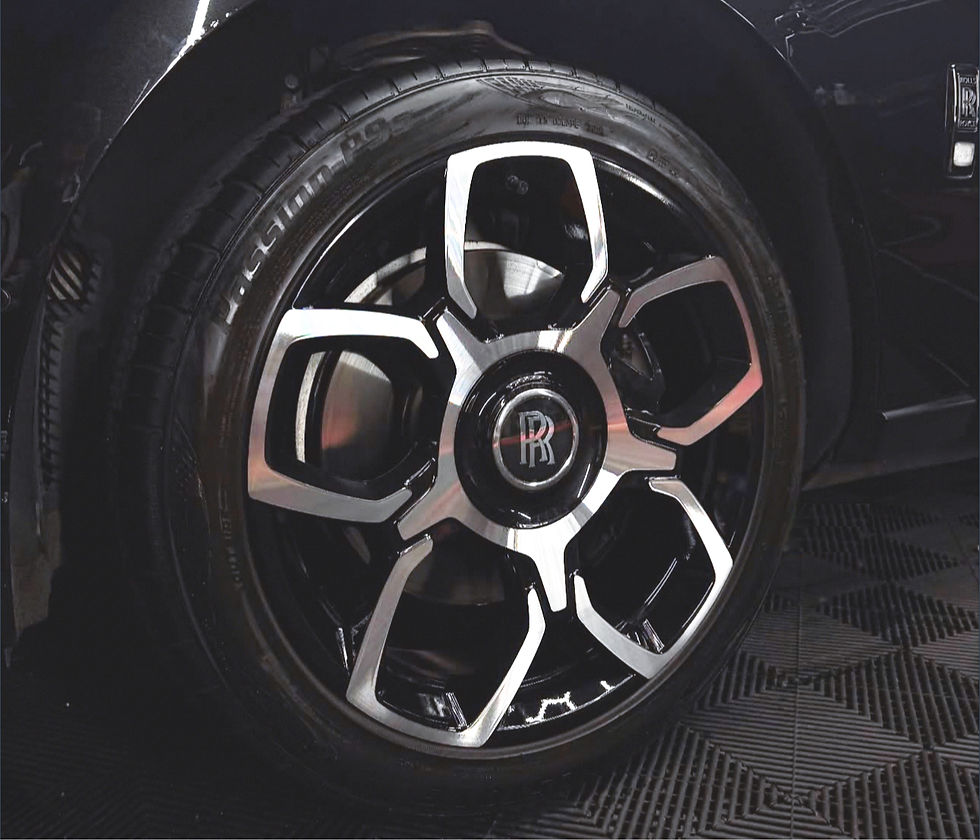
Responding to Kerb Damage Promptly
Kerb damage is common on London roads and it is not something to leave unaddressed. A chipped or scraped alloy exposes bare metal to moisture, oxygen, and road salt. Corrosion begins within weeks and can spread laterally beneath the remaining lacquer, causing the finish to lift and blister from the inside. A prompt professional refurbishment of a kerbed wheel stops that process before it becomes a structural issue and restores the visual integrity of the vehicle. See more about Alloy Wheel Refurbishment
Chrome and Silver Trim Maintenance
One of the Most Overlooked Elements of Luxury Car Care
Chrome and polished silver trim elements are found on some of the most recognisable features of luxury vehicles: grille surrounds, window channels, door handles, exhaust finishers, and decorative brightwork. On a Rolls-Royce, the chrome elements are central to the visual identity of the car.
On an Aston Martin or a Bentley, polished brightwork contributes significantly to the impression of quality and craftsmanship that defines the marque.
London's urban environment is particularly unkind to chrome and polished metal. The combination of traffic pollution, moisture, and road salt creates the conditions for corrosion, tarnishing, and pitting that can be difficult or impossible to reverse once established.
Regular Cleaning and Protection of Chrome Surfaces
Chrome trim should be cleaned at every wash using a pH-neutral product and a soft microfibre cloth. Under no circumstances should abrasive cleaners, steel wool, or harsh chemicals be applied to chrome surfaces. Pitting caused by corrosion attack is a permanent condition; it cannot be polished out and requires re-chroming or replacement to address.
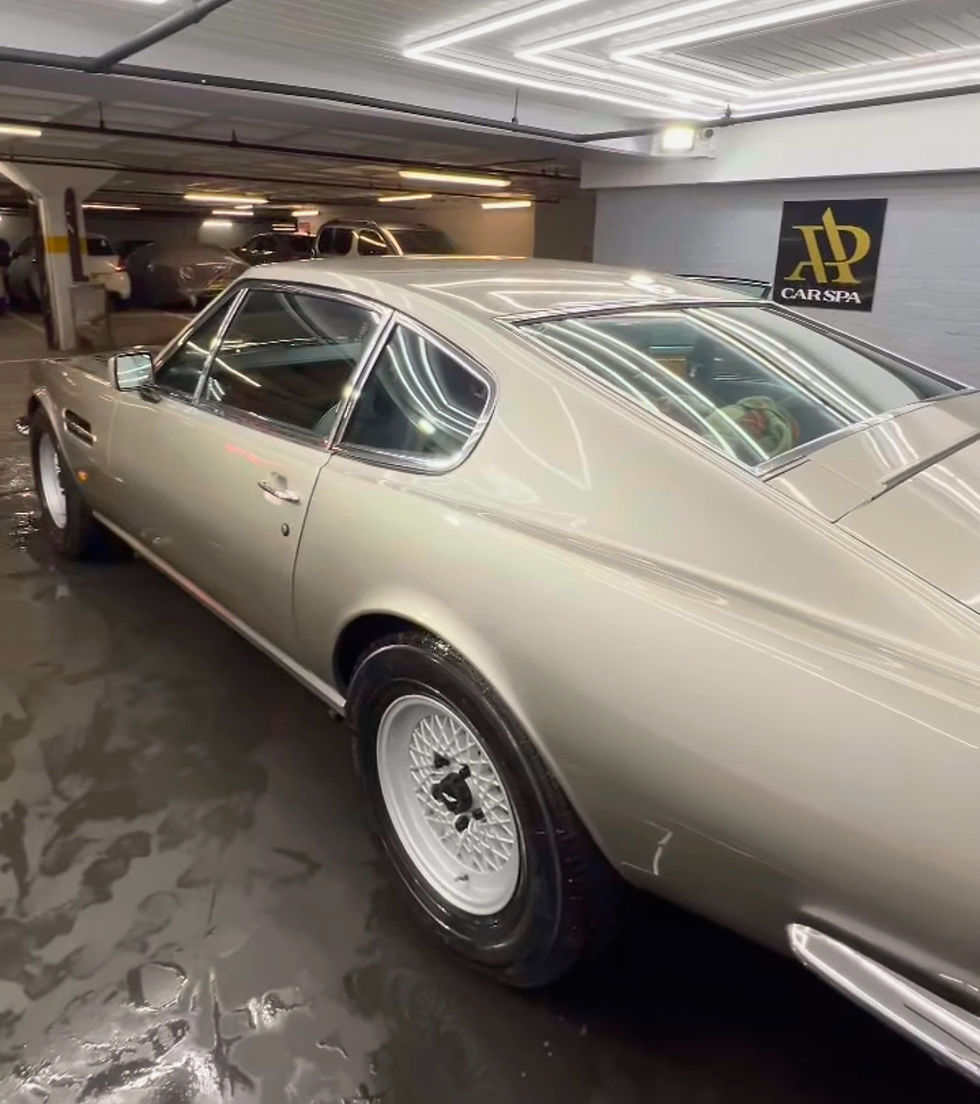
Following cleaning, chrome and polished metal trim benefits from a thin application of dedicated metal polish and sealant. Products such as Swissvax Metal Polish and Autosol Chrome Polish safely remove light tarnishing and oxidation, while a protective wax or sealant layer prevents moisture and pollutants from sitting directly on the surface between washes.
Window Channels and Rubber Seals
The chrome or stainless steel window channels on prestige vehicles are frequently neglected and become a site of corrosion, mould, and staining. These should be cleaned and treated at every full detail. Rubber seals around windows and doors should be dressed with a silicone-free rubber conditioner to prevent cracking and drying, which not only looks poor but reduces the weatherproofing integrity of the vehicle.
Exhaust Finishers and Lower Brightwork
Exhaust finishers and lower chrome elements are among the most contaminated areas of the vehicle and among the most commonly forgotten. Road salt, carbon deposits, and brake dust accumulate heavily in these areas. A dedicated metal cleaner and protective wax applied to exhaust finishers at each professional detail prevents the permanent staining and oxidation that develops when these surfaces are left untreated.
Protecting Your Car Against Weathering, Pollution, and the London Elements
Understanding What the Environment Is Doing to Your Vehicle
Weathering is a slow process, which is precisely why it is so often underestimated. The effects of UV radiation, moisture cycling, acid rain, and atmospheric pollution compound over months and years to degrade paintwork, fade interior plastics, crack rubber, and oxidise metal surfaces. In London, the density of traffic-related pollutants adds an additional layer of chemical aggression to what would otherwise simply be standard environmental weathering.
UV Exposure and Paint Fade
Even in London's relatively moderate climate, ultraviolet radiation causes measurable paint fade and clear coat oxidation over time, particularly on darker colours and on vehicles parked on street rather than in covered storage. A ceramic coating provides meaningful UV protection at the surface level. For vehicles in long-term storage or those used infrequently, a quality car cover with UV-blocking properties adds an additional layer of protection during periods of non-use.
Acid Rain and Atmospheric Pollution
Acid rain, formed when atmospheric pollutants combine with moisture in the air, has a pH level low enough to begin attacking clear coat on prolonged contact. In London, where pollution levels remain significant in dense urban areas, the risk is compounded by the frequency of wet weather. This is one of the reasons we advocate for ceramic coatings so strongly: the chemical resistance of a cured ceramic layer means that acid rain cannot reach the lacquer during normal contact, dramatically reducing the cumulative damage over years of city use.
Bird Droppings and Tree Sap: Act Fast
Both bird droppings and tree sap are acidic and both become significantly more damaging as they dry and concentrate on the surface. In warm weather, a bird dropping left on a ceramic-coated bonnet for 24 hours may leave a light impression in the coating surface. The same dropping left on bare lacquer for the same period in direct sun can etch permanently through the clear coat, leaving a mark that requires machine polishing to remove.
Our advice is direct: keep a quality detailing spray and a clean microfibre cloth in the vehicle. If you see a bird dropping or fresh tree sap, address it immediately. Do not wait until the next wash. The five minutes it takes to address the contamination on the spot is worth hours of correction work later.
Seasonal Road Salt: A Winter Protocol
Between October and March, we recommend establishing a formal winter maintenance protocol for any prestige vehicle used on London roads:
Rinse the wheels, arches, and lower bodywork with clean water as soon as possible after any journey in salted road conditions
Carry out a full maintenance wash at least weekly during the winter months rather than fortnightly
Apply a fresh layer of ceramic topper or wax sealant at the beginning of the winter season to ensure maximum protection is in place before salt exposure begins
Inspect alloy wheel surfaces monthly for any signs of corrosion beginning around the rim lip or barrel
Consider secure covered storage for periods when the vehicle is not in regular use during winter
Interior Care: Maintaining the Cabin of a Luxury Vehicle in London
The Interior Takes a Different Kind of Punishment
City use creates interior wear patterns that are distinct from motorway or rural driving. Frequent entry and exit means more wear on seat bolsters, door cards, and carpet edges. Urban driving involves more physical engagement with steering wheels, gear selectors, and control surfaces. Humidity cycling in London's climate affects leather more significantly than in drier environments.

Leather Care for City Use
Leather seating in a luxury vehicle should be cleaned and conditioned regularly, not just when it starts to look tired. For a vehicle used daily in London, we recommend a light clean and condition every six to eight weeks and a thorough professional leather detail every three to four months. pH-neutral leather cleaners remove the oils, perspiration, and grime that accumulate from regular use without stripping the leather's natural moisture. A quality leather conditioner, applied after cleaning, restores suppleness and creates a barrier against future staining.
For vehicles with light-coloured leather interiors, which are particularly popular in Rolls-Royce, Bentley, and Range Rover specifications, the transfer of dye from dark clothing is a consistent issue in city use. Professional-grade dye transfer removers and a ceramic leather coating applied by our team at AP Car Spa create a protective surface that resists future staining and makes the leather significantly easier to maintain between details.
Cabin Air Quality and Air Conditioning Maintenance
London's air quality means that cabin air filters in prestige vehicles accumulate pollutants faster than in cleaner environments. A clogged or degraded cabin filter degrades air quality inside the vehicle and can introduce unpleasant odours. We recommend checking and replacing cabin air filters according to the manufacturer's schedule and, for vehicles used daily in central London, considering more frequent replacement than the standard interval.
Car Storage in London: The Most Effective Protection Available
Why Secure Indoor Storage Changes Everything
We have covered a great deal of ground in this guide, and the most effective single measure we can recommend to any prestige vehicle owner in London is also the most straightforward: keep the car in secure, covered storage when it is not being used.
This is not about being precious. It is about the simple reality that every hour a prestige vehicle spends on the street in London is an hour of exposure to the contamination, moisture, UV radiation, and physical risk that we have described throughout this guide.
A vehicle in covered storage is not accumulating pollution on its lacquer, is not being rained on, is not subject to bird dropping attacks, is not sitting in the salt residue left by passing vehicles, and is not at risk of being touched, clipped, or damaged by other road users.
What to Look for in Prestige Vehicle Storage
Covered and enclosed: outdoor storage removes the weathering risk but retains the risk of moisture cycling, UV exposure, and physical access. Only fully enclosed indoor storage eliminates the primary environmental threats
Climate controlled or temperature stable: extremes of temperature and humidity are damaging to leather, rubber seals, and painted surfaces over time. A stable environment is preferable to one subject to seasonal temperature swings
Security: prestige vehicles represent significant value and require appropriate security measures including CCTV, controlled access, and ideally on-site monitoring
Proximity to your location: storage that is inconvenient to access will be underused. For Chelsea, Kensington, and West London owners, the ability to retrieve a vehicle at short notice is practically important
Access to maintenance and detailing services: the ideal storage facility allows for routine maintenance, detailing, and inspection work to be carried out on the vehicle during storage periods rather than requiring separate trips to separate locations
AP Car Spa offers secure car storage for prestige and collector vehicles at our Chelsea facility on Edith Grove, SW10. Vehicles in our care receive regular inspection, maintenance washes, and conditioning as part of the storage service, ensuring they leave the facility in the same condition they arrived in or better.
Find out more about our secure car storage service in Chelsea car-storage.
Using Car Storage Seasonally
For many of our clients across Chelsea, Knightsbridge, Mayfair, Kensington, and Fulham, the most practical approach is seasonal storage: using the vehicle regularly through spring, summer, and autumn, and placing it in secure covered storage for the winter months when road salt, standing water, and adverse weather create the most aggressive conditions for paintwork and alloys.
This approach means the vehicle is never exposed to the winter salt season, arrives at spring in the same condition it entered storage, and requires only a professional inspection detail and fresh ceramic topper application to be ready for the new season. It is the approach we see consistently from our most discerning clients, and the vehicles they bring back out in spring reflect the care that has been taken throughout the year.
A Practical Maintenance Calendar for London Prestige Vehicle Owners
What We Recommend, Week by Week and Month by Month
Weekly
Rinse wheels, arches, and lower bodywork with clean water, particularly after rain or in winter
Inspect for bird droppings, tree sap, or fresh contamination and address immediately with a quality detailing spray
Wipe door jambs, window channels, and lower sill areas with a damp microfibre cloth
Every Two to Three Weeks
Full maintenance wash using pH-neutral snow foam, two-bucket contact method, and iron fallout remover on wheels
Apply a quick detailer or ceramic topper spray to the bodywork after drying
Clean and dress rubber seals and tyre sidewalls
Every Two to Three Months
Professional interior detail including leather clean and condition, carpet extraction, and trim care
Inspect alloy wheel surfaces for early signs of corrosion or lacquer lifting
Assess chrome and brightwork for tarnishing and address with a metal polish and sealant
Apply a fresh coat of wheel sealant or ceramic topper to alloys
Every Six to Twelve Months
Full exterior detail including snow foam pre-wash, clay bar decontamination, paint inspection, and ceramic coating maintenance
Paint thickness assessment to identify any areas of concern
Engine bay steam clean and dress
Full review of PPF and ceramic coating condition with reapplication recommended where needed
Alloy wheel refurbishment if kerb damage or corrosion is present
Consistent, regular care is always less expensive and less invasive than reactive restoration. A vehicle maintained on this schedule will look dramatically better at five years than one that receives attention only when problems become visible.
Serving Prestige Vehicle Owners Across Chelsea and West London
Chelsea, Kensington, Knightsbridge, Mayfair, Fulham, Battersea and Putney
Our facility at Chelsea London Car Park is at the centre of one of the most significant concentrations of prestige vehicle ownership in Europe. We work with clients from across the Royal Borough of Kensington and Chelsea, Mayfair and Belgravia, Fulham, Battersea, Putney, and the wider South West and West London area.
Every service we offer, from a single-wheel alloy refurbishment to a full multi-day paint correction and ceramic coating, is carried out to the same uncompromising standard. We do not have a budget tier. We do not cut corners on process time or product quality. The vehicles our clients entrust to us are significant investments, and we treat them accordingly.
We offer collection and delivery for clients who prefer not to drive to us directly. We work by appointment and encourage an initial conversation or assessment visit before any work begins, so that we can discuss the specific condition and needs of your vehicle in detail.
Talk to the AP Car Spa Team
If you have questions about the condition of your vehicle, the protection options available, or the storage services we provide in Chelsea, we would welcome the conversation. The advice is always free, and the assessment is always honest.
We care about the vehicles we work on. After years of maintaining some of London's finest prestige cars, that has not changed. We look forward to hearing from you.
Book your appointment or arrange an assessment book-online.
Read what our clients say reviews
Learn about our secure car storage in Chelsea car-storage
AP Car Spa | Chelsea London Car Park, Edith Grove, London SW10 0ED | apcarspa.co.uk


Comments